

Why Do I Think In Global, Mythic Terms?
We play upon a stage. We don’t see a future of hoarding. We see a future of generosity. We know humanity is capable of this.
Even as children, empaths think globally. This is because we are born with an awareness that life has meaning. We’re also born knowing that we have an essential role to play in a grand, divine, magical theater that spans the universe.
When I was in the fourth grade, our teacher had us do a project where we predicted what the world would be like in 2020. Because of that, 2020 has always stood out in my mind as a signifiant milestone. While our childhood predictions didn’t come true (society has not become Star Trek), many of the problems I felt keenly aware of back then are still with us today.
A song from that era has been playing in my mind lately. One Tin Soldier by Coven (Bell Records, 1971) affected me deeply as a child, and I’m now returning to its theme:
Listen children to a story
That was written long ago
'Bout a kingdom on a mountain
And the valley folk below
On the mountain was a treasure
Buried deep beneath a stone
And the valley people swore
They'd have it for their very own
The people on the mountain, closer to god, with longer vistas, are the ones who have the treasure. In the song, they offer to share it, but the valley people aren’t content with that. They want to take it.
Wealth and Power
Most of the people around us think that having “stuff” is “being rich,” and this is not just due to “social conditioning” or any other psychobabble. It’s due to a fundamental disconnect with the cosmic drama. Rather than realizing that we’re playing on a stage, the valley people think that we are trapped in a dungeon, with a zero-sum battle going on. They must fight, they must take, they must dominate or they will be losers, impoverished, and subjugated.
The mountain people are empaths and enlightened souls who see way, way past this. They understand the true nature of riches. I like the way Eric Fromm, in The Art of Loving (Harper & Row, 1956), explains it:
In the sphere of material things, giving means being rich… The hoarder who is anxiously worried about losing something is, psychologically speaking, the poor, impoverished person, regardless of how much they have. Whoever is capable of giving, is rich.
Empaths have this understanding from childhood. (Many of my patients have financial difficulties related to it.) True wealth is attained through giving. We don’t live in a dungeon. We play upon a stage. We don’t see a future of hoarding. We see a future of generosity. We know humanity is capable of this. We know we can help. So empaths end up behaving in radically different ways (we wear our masks!) because we live according to a radically different reality.
Violence and Power
The real world often goes in the opposite direction. 1971 was a grim year, and the 1970s were violent, transformative times in the United States. The story in the song goes on:
Now the valley cried with anger
Mount your horses
Draw your swords
And they killed the mountain people
So they won their just reward
Now they stood beside the treasure
On the mountain dark and red
Turned the stone and looked beneath it
“Peace on Earth” was all it said.
Truth is the treasure, and it will prevail no matter what. But we’re all worried about the path we might take to get there.
What we need to realize is that the empath’s power is stronger than any other force coursing through humanity. Our energy does not lead to obedience, as does the evil version. Our energy leads to self-love and empowerment. Evil magic shrivels in violent death, while empathic magic blossoms to widespread enlightenment.
The Empath’s Global Perspective
You understand all of this intuitively, and this is what makes you an empath, and this is what anchors all of your thoughts in global, mythic, cosmic terms. You were born with this awareness, and even if you tried to repress it because of your situation, you can feel in your heart that the pure perception you had as a child is more accurate and elegant.
For us, the essence of authenticity is being in touch with that core self when you were young. We play these roles in life, but they’re not truly authentic. Go back to that time when a hug meant more than anything on the planet. Remember those times when everything you have connected with all that is. Experience again that level of awareness, and identify with that, because that’s who you truly are. Your roles don’t need to change; you can be an empath from anywhere in society. What changes is the way you feel about yourself.
With that change comes your greatest impact on the world. That’s the power you know you can access to help steer society towards it potential rather than its destruction. We hold the true treasure, and by being true to our nature, we encourage others to find it.
Photo by Juan Encalada on Unsplash

Self-Care When You Feel The World Spiraling Out Of Control
We find out that, sometimes, we can’t heal people fast enough to save them. We can’t heal groups of people just by thinking about them, either.
Things are really intense right now. A recent study found that eighty percent of Americans believe their country is “spiraling out of control,” and two thirds of them show “signs of clinical anxiety or depression.” Empaths are dangerously challenged to process it all, because we are so acutely aware of the suffering around us, which encompasses the suffering that causes anxiety, as well as the anxiety itself.
There are two parts to caring for yourself that I want to talk to you about. The first part is developing the ability to get perspective on the heightened emotions you’re tuned into right now. The second is to learn how to preserve yourself for the long-haul.
They both involve memories from your own life. If you’re quite young, then you have seen more than your share of global hardship already. I have patients whose families were devastated in the 2008 financial crisis, and who were on the verge of recovery when COVID or police brutality tore the very fabric of society. The suffering is real.
Perspective
When I was a little girl, I spent a lot of time with my sister’s grandparents, and her grandmother was of Jewish heritage. I clearly remember one evening at one of their card parties, when the adults were playing cards. I noticed that one my grandmother’s friends had a series of numbers tattooed on her arm, and I blurted out, “Mommy, is she cheating? See the numbers on her arm?” A chilling stillness passed through the room before my grandmother’s friend picked me up and held me in her lap. She told me about the concentration camp where the tattoo came from, and she ended her story by telling me, with intense passion, as you can imagine, “Never be afraid to live every single day, and to ask every single question.”
I was shocked by her story and followed her advice by learning everything I could about the Holocaust. I was astonished at what human beings could do to each other. All empaths have these experiences when they are younger. Something like that is thrust at them, and they can’t help but want to understand what it is. That’s their response: to understand, to know.
It gives us purpose, because even as children we know that we can actually do something about it. Empaths want to do everything they possibly can. As a child, you might remember believing, as I did, that if I was thinking about you, I could protect you. As a child, I wanted to prevent you from being hurt in the first place. Over time, empaths learn that they rarely get the chance to do that. Most of the time, they help heal others after they’ve been hurt, and in that situation, it actually is possible for us to help someone by thinking about them. We can give healing energy to others simply by force of will.
Broken Dreams
Young empaths just naturally set out to heal the world with this ability, and most all of us have grand ambitions of healing everyone and preventing all future pain. This is a child’s understanding, a child’s wildly innocent hope. But, even as adults, we never fully abandon it. We really do have magical abilities, after all, so we tend to think that having a global impact is just a matter of getting enough magic to flow through us.
We also intuitively realize that the way to heal the world is to start with the people around us, and that leads to our first disillusionments. We find out that we can’t heal people who do not want to be healed. Years ago, when I was just starting my practice, I was assigned to a suicidal patient. This person was so far down the hopelessness hole they couldn’t see the sky, and they eventually did commit suicide. I was crushed. It was one of my darkest moments, even though everyone who had worked with the patient assured me that we had done all we could.
We find out that, sometimes, we can’t heal people fast enough to save them. We can’t heal groups of people just by thinking about them, either. This gives us a clearer understanding of what we’re up against. There are a million media outlets dedicated to serial killers, torture, rape, war and mayhem. There are only two, that I can think of, about the wonderful things happening in our world.
Why do so many of us have an innate desire to submerge in this negativity? Why are people so ready to believe that “other people” have to be met with violence and power? Why are they so eager to believe that, while they are kind and loving, the “other people” are inherently evil and dangerous?
Empaths don’t get it, and we don’t like it. We can fall down the hopelessness hole. I had one very scary moment when everything went completely dark, and I felt like I had no control. I was plunging down the hole, shocked. There wasn’t even any precursor to it that I could perceive at the time, no photo or headline that “hit me” — it just came out of nowhere.
That’s a real danger that you are facing right now, too, because of our historical moment. When you start to fall, use your intellect to recollect that we’ve been through history like this before. From a black person’s perspective, we’ve been cycling through this for four hundred years, with almost no spiritual progress. Putting it in that larger context can help you breathe.
Self-Healing
But it won’t help you flow emotionally or cosmically. For that, you need to remember your life as an empath. There’s something else that you’ve been doing since you were a child, and it’s really important to think about it now, so if you fall down the hole, you’ll have a ladder to get out.
Since you were little, you have always remembered those rare moments when your good deeds actually seemed to dawn on somebody. You were always empathetic, always good, always working your magic in your thoughts, but most of the time, no one knew. Every now and then, however, a glorious moment would come when someone would let you know that you helped them.
These moments thrilled you, and each of them still does. Every one is like lighting a match in Plato’s cave. There is truth. There is beauty. The universe is miraculous. Once the match is lit, even when it goes out, you’re going to know that there was light. You’re going to know that light itself is real.
You collected these memories for a reason. It’s an empath’s instinct to collect them. Because when you are being sucked into the hopelessness hole, you can use those memories to save yourself. When I was little, I imagined keeping them in a box, and it wasn’t until decades later that I found out a lot of empaths do this, and it’s actually been formalized into a therapy.
When I fell in, I literally opened my box, and intentionally remembered the times when others noticed I had helped them and said something to me about it. This was so powerful that, out of nowhere, I had a spiritual experience. I heard someone saying, “You have to stay here.” It was information from the universe itself, and it has become one of the most important memories I keep in my box.
The Times They Are A Changing
There’s one more aspect of our historical situation that I want to help you process, because it’s connected. When there is so much pain screaming at us from every direction, we tend to worry that the apocalypse has begun. The prophecy was about four horsemen, and when we look around, they’re rampaging now.
But that’s prophetic thinking, religious thinking, false thinking. You’re an empath. If this really was the end of the world, you wouldn’t be wondering if it was. You would know. Since we know it isn’t, you can reject the notion, because the notion comes from your societal training, and not from your intuition.
You and I also know that all things in the universe ebb and flow. Right now, we are awash in pain. But when the tide turns, it will be one of the most amazing transitions humanity has ever produced. We may not witness it in our lifetimes. Transformations like the one we’re in take a long time. Previous, local ones, like the Age of Enlightenment, took over 200 years. We’re looking at something global in scale, and so it will certainly be even more epic.
I think it’s instructive to consider what Ruth Nanda Anshen wrote over sixty years ago in her introduction to Eric Fromm’s masterpiece, The Art of Loving (Harper & Row, 1956):
“There is in mankind today a counterforce to the sterility and danger of an…anonymous mass culture, a new, if sometimes imperceptible, spiritual sense of convergence toward world unity on the basis of the sacredness of each human person and respect for the plurality of cultures.”
We’re still on that path. Your responsibility to the world, as an empath, is to help humanity reach this convergence. Your responsibility to yourself, as an empath, is to keep yourself strong, so you can.
Photo by Ben Mater on Unsplash

Witches, Angels & The Law Of Attraction
Being an emotional, sensitive, and caring person, who also happens to be really dangerous to people in power, presents empaths with a lot of unique challenges.
I’ve had three clients give me gifts featuring Guan Yin, the Buddhist goddess of compassion. These people don’t know each other and they could not have coordinated their gifts. Yet when they made them, each told me the same thing: “You are Guan Yin.”
There’s a clear and obvious reason why this happened, but if you’re an empath who is just now coming to terms with your gifts, it might not seem clear or obvious, so let me teach you about yourself by showing you what I mean.

Empaths Through History
The word “empath” is brand new. It’s only been gaining popularity since the 2000s, and it’s been very useful. A portion of our population is always looking for respectful and inclusive ways to describe different types of people, and I think “empath” is intended to be respectful and inclusive.
It’s also a vast improvement. Throughout most of history, people like us were called “psychics,” “clairvoyants,” “mediums” or, most dangerously, “witches.”
All “witches,” men and women, had strange powers that others did not possess and that they could not understand. Sometimes, it was believed that “witches” spoke to angels, like when St. Bernadette of Lourdes had visions of the Virgin Mary that led to the creation of the Shrine of Lourdes. Most of the time, it was believed that witches spoke to the devil. This was especially true under puritanical dictatorships. When any woman taught any other woman how to control her own menstrual cycle or otherwise take charge of her life, she was a witch in league with the devil. I have an ancestor who was burned at the stake in France for just this reason.
Throughout most of modern history, empaths found it much safer to live in secrecy. Most empaths alive now went through a long phase of secrecy in their childhood. By the time you were four, you had already figured out that you were significantly different from the people around you, and you hid it. You had a profound life in secret, often involving mysterious rituals, magical tools and enchanted altars.
There was something instinctive in that. If you look at Jungian archetypes throughout history, humanity has always had a love/hate, angel/devil relationship with empaths. We always elicit a strong reaction because we have access to sources of information that are far deeper and far more “true” than anything based in just the human realm. We are so sensitive to other people’s pain that sometimes what is actually simple logic to us seems to them like we’re reading their minds.
The way people reacted to you when you pulled off feats like that changed your whole life. Most of us are met with suspicion and we quickly learn to keep our “powers” to ourselves on pain of rejection and even outright danger. I’ve been in situations where a person became aware of my empathic powers and then latched onto me far too fiercely. We can be like drugs to some people, and they’ll leech off of us to the point of death, if we let them. More often, we’re just regarded as freaks and we’re attacked unthinkingly, the way gay people used to be beaten to death with no warning or reason.
Empaths in the Universe
We freak out the powerful because we can see straight through them. We can access a deeper source of truth, and we will know it with such certainty that, St. Bernadette-like, we can become more powerful than they are. Ekhart Tolle was homeless in Germany for years, only to suddenly, one day, influence millions. If you’re a fraud clinging to power because your base believes your lies, assumptions, and prejudices, an empath like that is extremely dangerous.
Being an emotional, sensitive, and caring person, who also happens to be really dangerous to people in power, presents empaths with a lot of unique challenges. The negative energies are immense and intense and well-known. A lot of them have been directed at you, and if you’re like most empaths today, you spent a good part of your life protecting yourself. Empath children born to people who are not well, they will take on all of that “yuck,” and, for a long time, make it theirs.
But now, you’ve found me, and that’s not an accident. You’re ready to repair the damage the negativity did to you. As soon as you understand what the bad is, it simply drifts away, I assure you. You’re ready to own what belongs to you so you can spread the good through the world.
More people believe in the goodness, but they are terrified of saying that they do, because the negative dominates the community. You have a role to play in that, and you’re ready to make your debut.
Angels & The Law of Attraction
There was a place and time when you were completely connected, when your heart was not infected by anything ugly. There’s that place in every empath, and the ones who long for it are the empaths who look for me, because I know how to get you back to that place.
People use me as a touchstone to realize who they truly are. When they get that, and when they trust in that, an angel steps in and shows you the light. As soon as you’ve seen it once, you can never unsee it. The Law of Attraction opens up for you.
We think of the Law of Attraction and angels and our psychic abilities as separate things, but they are all aspects of one thing. Our experience of reality is different because we have these extra dimensions attached to our perception. Angels are as real as sunlight, and the energies flowing from the earth are as real as water, and the caressing of other’s minds with our own is as real as the animals who come to us for love.
All three patients who gave me Guan Yin are empaths. They all saw the same thing, in dimensions beyond normal reality. They described what they saw by means of a Buddhist goddess, and since what they were seeing is real, they all picked the same goddess.
This is the glorious way an empath leads their life. The next understanding on the path is for them to realize that they are Guan Yin just as much as I am, and to realize that Guan Yin and all the other gods and goddesses are ready to come into the world through us.
If there was ever a time when they would burn witches at the stake again, it is now. We have a crucial role to play in history. We will find a way to guide people who are not empaths onto a more righteous and beautiful path. And we will do it without weapons and without war.

Spirituality & Why You Are Here
An empath’s inner discourse thrives on the search for meaning. Your objective is not to get past life events, good or bad, but to understand what they mean.
One of my younger patients told me about a meme that went viral in earlier this year: “Fun fact: some people have an internal narrative—and some don't.”
The meme sparked so many conversations it was covered buy the mainstream media asa story unto itself. People didn’t know about this difference, and were astonished.
Those who have been listening to a continuous internal dialog for their whole lives were incredulous: “No voice in your head? How do you think?” Those who who don’t have an internal dialog were equally astounded: “How could you possibly function with a voice in your head all the time?”
People without a voice in their head still think in words, but for many of them, that plays out in a rather straightforward way. One of the best examples I can give you is from David Foster Wallace’s collection of essays, Consider the Lobster (Little, Brown & Co., 2006). In How Tracy Austin Broke My Heart, he reviews Austin’s autobiography, although his main theme is about the consciousness of world-class athletes.
He tells us about the young tennis star’s meteoric rise to two-time Grand Slam winner, and her subsequent demise, due to injuries and fatigue—all before she was 20. Then, on the eve of her comeback, she was stopped in her tracks when her leg was crushed in a car accident.
An empath’s response to such a horrific, life-altering tragedy would be significantly different than Austin’s. She writes, and I think you will agree that this is remarkably succinct: “I quickly accepted that there was nothing I could do about it.” Wallace wonders, with his usual perspicacity and humor, “What if…that statement is not only true but exhaustively descriptive of the entire acceptance process she went through?”
There are people like that. Their inner discourse describes reality directly, and they accept what they cannot change and move on with their lives without a whole lot of inner turmoil.
Your Search for Meaning
You are not like that. An empath’s inner discourse thrives on the search for meaning. Your objective is not to get past life events, good or bad, but to understand what they mean.
And here’s why: There must be meaning, because you have always known that there is meaning. There is something greater than you, greater than you and me, greater than you and me and the universe, cradling all that is. You have always, from your very first moment of conscious thought, known that this is true.
No matter what confronts you or confounds you or hurts you, you understand it in this greater context. And, you live your life according to an ethic and a code of honor that arises from this aura of meaning that permeates everything.
You have since birth. For me, it was knowing how to care for my sister and my mother. I intuitively knew what to do in any situation. My mother was brilliant and we had a tumultuous relationship with her. My sister needed me first, and I just knew that singing to her was the way to drain the pain out of her and into me, where I could heal it for her. This led me into musical theater as a young woman, but more importantly, throughout our lives, my sister has felt free to call me at any time she needed a song. My mother was an empath, too, but she drifted into addictions, and I knew how to help her, as much as she would allow, along that merciless path.
From the outset, I knew that I was here to help them. You have also had this experience of knowing that you are here for a reason. Pause to think about the way we phrase this to ourselves in our inner discourse: “I am here for a reason.” Here from where? Why do we feel like we have arrived in this world? It is because we are also born with an awareness of some other place from which we came.
The Darkness Within
We came here to do special work, and every empath I talk to feels like they were meant to be here now, during this historic moment.
Before we get to why, let me give you a word of caution. You are painfully aware of how humanity’s intuitive awareness of something greater has been twisted into religious justifications for war and mayhem. This has been true throughout all history and across all cultures. The story is always the same: clerics tell you that the only divine things that matter all happen after you’re dead. They tear your spirit from your life and place it beyond your grave, so you will charge screaming into battle to go get it.
That story goes really deep, and it might affect you without you fully realizing it. You can catch yourself striving for a reward beyond the grave in lots of ways. I have patients who are deeply empathic care givers. They are doing sacred work. But, sometimes, they drive themselves perilously far into the threshold between here and where they came from.
Your empathic nature can easily be dangerous to your health, in the world as it is right now. Your inner dialog and your sense of purpose can make your life seem like a speck in the overwhelming expanse of which you are aware. You can subconsciously place the fulfillment of your purpose beyond the grave. There are several ways to deal with this; have the courage to examine them all. An empath can fulfill their calling from anywhere in society. Above all else, preserve yourself.
Why You Are Here
Your purpose does not lie beyond the grave. You are here now because you are needed here, now. In almost any population of mammals, there are always a few animals who take it upon themselves to stay at the perimeter, keeping the tribe together and scouting for danger. They spread awareness.
We are them. We see more of the terrain than others do, and we understand the lay of the land. We can roam farther because we can draw energy from the cradling force holding everything. Our internal discourse rings with information from something greater. Our perimeter is our heightened understanding of what is happening to humanity and to all living things today. We are here to keep the tribe on the path to enlightenment. We are here to scout ahead and find the way to go.
Why Do Empaths Ignore Intuition, And Wish They Hadn’t?
You internalize all the “toughen up” voices from your past. None of them is your intuition.
When I was little, my grandpa was one of my favorite people. He wasn’t my biological grandpa, but that didn’t matter to either of us. When we went walking, he would smoke a cigar, which was one of our special secrets. No one, especially grandma, ever found out.
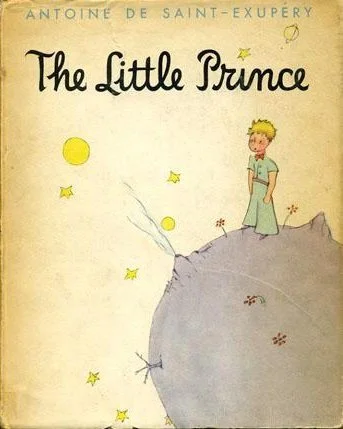
When I was in primary school, he gave me The Little Prince by Antoine de Saint-Exupéry (Reynal & Hitchcock, 1943). He said, “I know you’ll understand this,” and he was right. I treasured the book. The golden-haired Little Prince, visiting Earth from a small planet, was one of first empaths I ever met. The story is ethereally beautiful, but for today, let me call to mind the reason the Little Prince left his home, and why he decided to return.
A rose grew spontaneously in his garden, and the Little Prince fell in love with it. She was rather demanding and something of a hypochondriac. Over time, the Little Prince began to fear that she was taking advantage of his empathic nature, to make him tend to her all the time. The more she demanded of him, the more he wanted to explore the universe. So he stopped letting his love guide his actions, and took off.
Empaths deal with this exact same problem all the time.
Empaths Are Different
Empaths know they’re empaths by the time they’re about four years old. They don’t have the words to intellectualize it, of course, but that doesn’t really matter. An empath’s internal dialog is not based on words. It’s based on feelings. And empaths feel everything, deeply and personally.
So, even at four, you fully experience yourself as an empath. Most other people think you’re an alien. They have no idea who or what you are. You do not react to situations the way they do, and so you’re incomprehensible. When I was a child, there was a great deal of stress in my household. But I didn’t merely process what was directed at me. I was mostly concerned with my sister. Even as a child, I intuitively knew that she needed me to sing to her every night. That became the only way she could fall asleep. I clearly remember how good that made me feel. I had purpose, and I had the ability to fulfill my purpose, and it was wonderful.
Empaths are able to absorb other people’s pain into themselves, which makes the other person feel better. Most people have to give their pain to someone to get rid of it. They learn not to give it to people who would use it to hurt them more. They can’t give it people who would be hurt by it, because those people don’t make themselves available.
So they give it to you, because you offer to take it. And you offer because you know you can heal yourself from it. You know that you can metabolize their pain, and it’s true. You draw power by singing to others when they are crying and frightened. You will listen and care, and you will ask for nothing in return. You were born this way, and it is so different, it’s freakish. They used to burn us at the stake.
The Problem With Intuition
So what happens to a person like you as you grow into adulthood? Well, at several points along the way, you have times when you feel like the Little Prince. It seems like the roses in your life are asking for too much. Everyone has always told you to “toughen up,” and, sometimes, it seems like they have a point.
But really, the voice telling you to “be normal” is your mom, or society, or authority figures or religious figures, telling you not to fall in line with who you are. Part of your attempt to be normal is to think in terms of “being taken advantage of.” While this might seem like practical guidance, acting on it has dire consequences for an empath. It’s not you. If you think in those terms, you’re not being true to yourself.
This is why it can be so difficult for an empath to follow their intuition. Empaths feel their intuition, so it’s hard to understand the need to explain it intellectually. When you are cornered and forced to justify yourself with a logical discourse (complete with footnotes), you can’t construct the argument. If you have cornered yourself, which is so often the case, you might throw up your hands and, intellectually, decide that since you can’t defend yourself with logic, you have lost the debate.
You internalize all the “toughen up” voices from your past. None of them is your intuition. If you act upon those voices, and “toughen up,” maybe even admonishing some of the roses you love, or leaving them, you’ll hurt yourself even more. Later, when you realize that you didn’t follow your true intuition, and you regret it, this is what actually happened.
You can always tell what your true intuition is. Always. You might not like what it’s saying—but you will always know which voice is truly yours. There aren’t many people like you around, and your intuition is going to lead you in directions that seem insane to others.
The hard part is having the courage to follow it, no matter what. Being an empath is difficult. People see your kindness and your tears, and they mistake that for weakness. In fact, you have mystical abilities to heal others and yourself. In some ways, you are one of the toughest people in the world. You didn’t ask to be like this. You were born this way. The judgement about being an “incomprehensible alien” comes from outside of you.
You stumble when you internalize it. Instead, trust your intuition, even when that means trusting it with your life. Especially when that means trusting it with your life.
Your Intuition
Your intuition is connected to something greater than you. You’ve always known this, too. If there’s some religion or dogma stuck to this knowledge, I’d encourage you to peel that away for a moment so you can feel the essence of it. No words, just you and the universe.
When you’re being completely authentic, you’re giving. You’re also receiving, even if the way you receive is not the same as others. When you see that you have healed someone else, and when they realize that you healed them, that’s love taking a beautiful form, unique to you. A lot of pain is exchanged, true. But your soul will always know how to heal itself. Your challenge is to let it.
That’s what happened to the Little Prince. After he left his rose, he visited several planets before he came to Earth. On each one, he met a grown-up trapped in some “toughen up” way of thinking. But after talking with de Saint-Exupéry in the Sahara for a week, he realized that he had left his rose because he had listened to “toughen up” voices in his mind, and not his own intuition. He remembered how much he loved his rose. More importantly, he remembered how much his rose loved him. She expressed her love as best she could, and even though that was less than perfect, it was true love. He decides to go back to her.
That love is why you’re here. Know this. You’re an empath. Once you get that this is you, it’s ok — just, all the sudden, you’re ok with yourself. You have to give yourself permission to be who you are. You’re here to be a very special person. The world may not understand you, but the world needs you. Now, more than ever before.

When Your Therapy Feels Wrong, Do This
Within you stalks a light wolf and a dark wolf...
You’re different. You’re hyper-aware of what’s going on around you, and so you react in ways that others don’t understand. Only 20% of the population is like you. I’m like you.
When I was a kid, I was put in a special class with only a few other children. No one explained why. Something similar probably happened to you, but if you are in your twenties or thirties, as are are many of my clients, you got even worse treatment. You were so “different” that they gave you drugs to make you “normal.”
People like us have always been singled out. In the deep past, we were respected as healers and visionaries. In modern times, we have been persecuted as witches as “weirdos.”
Our sensitivities and our fearless willingness to protect others makes us extremely annoying to authority figures. They put me in a special class to get me out of the way. They gave you drugs to crush your unique abilities. In my decades as a therapist, I’ve seen institutional situations where I was disgusted to find every single patient sedated. It had nothing to do with what their mental health. It had everything to do with making life easy for the staff.
Our society is organized this way, truth be told. If you’re perceptive and fearless to the point of being a threat to the powers that be, the path to persecuting you is straightforward: They “diagnose” you with a “disorder,” and they give the disorder a name. Then they arbitrarily decide that your “disorder” is negative.
On some level, especially if this happened when you were young, and even more especially if your parents agreed with the diagnosis, you let yourself agree with it, too. You fell into their idea of who you are. You think about how awful your “disorder” is. You fight it. You consume drugs to control it. You judge yourself for anything slightly “abnormal” that you perceive or know.
But wait a minute. Why all this negativity? The psychologists’ scripture, the Diagnostic and Statistical Manual (DSM), once listed “homosexuality” as a disorder. For generations, unimaginable suffering was forced into queer people because of it. Then, in 1973, they came to their senses and removed it. How many “disorders,” like OCD or ADHD or any of dozens of others, will be dropped from its pages in the future? I think a lot of people’s true potential is being wasted with negative diagnosis like these.
Two Wolves
You are probably reading this because you intuitively know that there is nothing “wrong” with you; you intuitively know that you are “gifted,” not “abnormal.”
Your main mission has been to identify the thoughts that are the deepest and most authentic expression of yourself. You already know that there are many different kinds of thoughts pulling you in many different directions. You have spent your whole life trying to sort them out, and you have tried to get this “right” according to the authority figures who prescribe you drugs.
This effort is reaching a high level of intensity within you. Your intuition is pulling you out of the judgement of others, out of the judgement of society, out of the whole mental construct that drives our society. This can happen at any time in life; many of my clients are Millennials who are deeply questioning their understanding of reality while they are in their twenties and thirties. I've worked with many older people who reach this crisis after faking it at being “normal” for most of their lives.
Balance Is Wisdom
It’s highly disorienting. It’s easy to become afraid and confused. Let me give you a mental exercise that can help you find your way.
Think of it like this: there is a fight going on inside of you between the “light wolf” and the “dark wolf.” Light is optimism and love, while dark is righteousness and anger. The light wolf and the dark wolf are both part of you; you need both.
But for your whole life, you and everyone around you has focused on the dark wolf. You throw drugs at the dark wolf. You police the dark wolf. You fear the dark wolf. It’s true that sometimes the dark wolf can cause dangerous behavior, and it’s important to remember that. But just trying to eliminate the dark wolf by treating it as a “disorder” makes those dangerous behaviors more likely.
By focusing so intently on the dark wolf, it get stronger. The more you fight it, the more fierce it becomes. The dark wolf feeds on negative feelings. It also feeds on your efforts to fight those feelings, or by pretending you never have those feelings. Ignoring or denying the dark wolf feeds it. We can’t deny that we have negative experiences of mind.
At the same time, But your light wolf is thrashing around in pain and confusion. It feels neglected, and it longs for expression. The attention you focus on the dark wolf has made your light wolf feel like you don’t want it. The authority figures don’t know that the light wolf is there. Authority is all about power, which is why it provokes your righteous anger. They have focused you on your dark wolf your whole life because that way you submit to their power. You submit to their definitions, and to their definition of your “disorder.”
Therapy ought to do the opposite. It ought to guide you to the light wolf. It ought to show you how to embrace your unique perceptions and use them constructively, for yourself and for others. We want to learn how to feed the light wolf. We want to focus more on the good feelings. We want to come to a place where we accept all parts of yourself while definitely wanting to live in the positive space.
In fact, the only way you will learn to truly embody your authentic self is to realise that you will never be at peace until you embody both the light wolf and the dark wolf, with the wisdom to know the limits of each, and to know how to get them to work together.
Your subconscious mind is calling out for this balanced approach. That’s why your therapy feels wrong. Your subconscious is saying, “Don’t eliminate any of me! Let’s channel these abilities!”
When Your Therapy Feels Wrong, Do This
Think about the names of “disorders” you have been “diagnosed” with.
Drop the names, and forget the notion of “disorder” and “diagnosis.”
Wonder about the powerful abilities inherent in who you are.
Acknowledge that these powerful abilities can be dangerous to you and to others.
Wonder how you might use those abilities to give yourself power instead.
Learn techniques to tell the difference between power and danger and to find your balance.
Training Wolves
The light wolf is amazing. The light wolf can benefit from the dark wolf, but only if the dark wolf feels safe. They’re pack animals, right? They need each other, and they need you. If you try to kill either of them, you are attacking yourself, and your sub-conscious mind will never cooperate with that. It will suffer for it, but it will never cooperate.
The best path forward is to train both wolves. Get to know both wolves. When you befriend them both, you can have all the power, without worrying about the danger.
Understanding this, you can enjoy all of yourself and basically wake up to who you are inside. You don’t judge yourself, because actually those judgements come from outside of you. Those outside judgements cause your anxiety. They cause you to live inauthentically, at war with one of your wolves. Once you actually allow yourself to feel how you feel, dark and light, you gain your voice with confidence.
You will once again be the person the authority figures needed to neutralize. You will be wise enough to protect yourself while you become your authentic self. Your potential is vast.
Photo by Judeus Samson on Unsplash