

Kindness Will Win In The End
We grew up with stories—Disney movies, Aesop’s fables, the Bible—that promised the good guys would win. That truth matters. That kindness will triumph.
And right now, it feels like those promises were a lie.
Americans are in pain. Many of us feel betrayed.
We grew up with stories—Disney movies, Aesop’s fables, the Bible—that promised the good guys would win. That truth matters. That kindness will triumph.
And right now, it feels like those promises were a lie.
But I want to tell you something important: they weren’t.
Yes, Walt Disney himself had some dark associations—he sympathized with Nazis and participated in antisemitic organizations. Some of that may have been the water he swam in, the culture of his time. It’s a significant personal failing, but does not obviate the content of the stories his company told.
Those stories—the ones that touched our hearts—they weren’t lies. They were aspirations.
Aspirations that have lasted because they speak to something real.
Look at the big theme of the Bible—not the fire and brimstone passages selectively quoted by those who need fear to feel powerful—but the Beatitudes. “Blessed are the merciful.” “Blessed are the peacemakers.”
Soldiers show up in riot gear and fire rubber bullets into crowds of unarmed protesters. That’s cowardice. That’s unmanly. That’s far beneath us as Americans.
“Blessed are those who hunger and thirst for righteousness.” Those are the real heroes. They’re the ones being shot at.
This message has lasted for over two thousand years. It was taught to us through Disney and other American myths like Superman and Star Trek. It’s still with us, and will always be with us, because it is aspirational.
Spreading hate, bullying the defenseless and spreading lies to justify it all is not. All that is decay, deceit. It’s a disgrace for our country and for humanity as a whole.
Aspirations are completely different. If you’ve ever seen animals help each other, or bonobos playing joyfully, or children laughing, or a person doing a good deed, you’ve seen something real. Something instructive. Something hopeful.
The universe is an interplay of cooperation.
Even in our own bodies, cells work together to keep us alive. Even in ecosystems, competition is not the rule—interdependence is. The leader of the wolf pack isn’t a bully. He’s a leader. The queen bee doesn’t hoard everything. She makes sure all the bees are okay.
That’s what we forgot. And that’s what the fearmongers hope we’ll never remember.
The Trump movement has only one message: be afraid. Fox News has been fabricating stories to create fear for decades. Trump is the result.
During the campaign, we were told that foreign governments were emptying their prisons and sending criminals to America as immigrants. Is ICE rounding up all these criminals? No. They can’t round them up because they don’t exist. But ICE has to look tough. So they bash in the door of some mother and cart her away instead.
Trump and Fox News say, “Be afraid! Someone is coming to take what you have. The only thing worth having is money. There’s not enough for everyone, so be afraid.”
They say there isn’t enough, but there is.
They say we have to fight to survive, but we don’t.
They create hierarchies so people feel afraid. So they can control us. They want us to believe we are alone. But we’re not. We’re connected. We’ve always been connected.
The old fables and the Beatitudes were telling the truth. "Even the smallest act of kindness can make a difference."
In Disney’s Escape to Witch Mountain the villain tries to capture gifted, empathic children to use their power for evil. Just the same, there are forces today trying to weaponize our best traits: our empathy, our creativity, our desire to do good. All of those reasons are trotted out as justifications for the Administration's power grabs and police state bullying.
But they won’t succeed. Liars never do, in the end. Believe it because it is true.
There may be some who need constant conflict to feel alive. There may be kids raised in broken systems who believe they’re owed a six-figure life just for showing up. But that’s not the world we have to live in.
We can choose a different path.
We can be like the bonobos, the wolves, the bees. We can look at Maslow’s hierarchy and realize: once our basic needs are met, the true work of life is to love, to create, to be in connection.
We don’t need to dominate. We don’t need to fear.
We need each other. It may be frightening to think we’re alone in the universe—but even if we are, then that makes our kindness, our creativity, our solidarity all the more miraculous.
We’re not just here to survive. We’re here to build something beautiful.
Kindness will win in the end. It always has. If it hadn’t, we would have destroyed ourselves centuries ago. Kindness will prevail again. We were not betrayed. But we are being tested.
If this resonates with you, or if you’re looking for ways to stay grounded, hopeful, and connected during this turbulent time, let’s talk. You’re not alone.
#Kindness #Hope #Democracy #Connection #LinkedInVoices #Leadership #MentalHealth #Empathy #PoliticalCrisis #StorytellingForChange
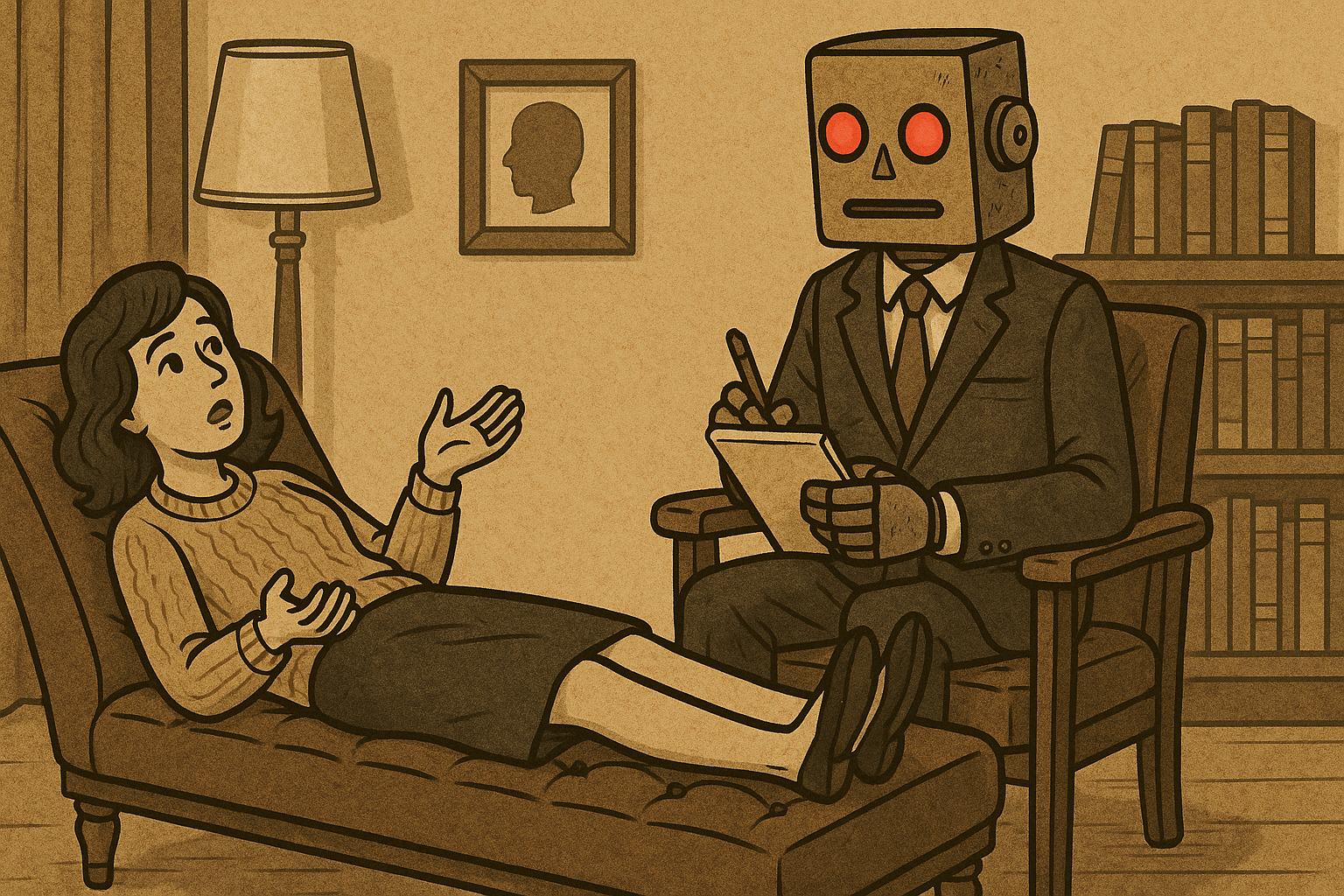
Therapy From Machines? It Might Backfire…
The human connection that’s so essential to any search for mental health is being shunted off to a machine. This is just as bad as people self-diagnosing from TikTok.
We’ve all used artificial intelligence now, and most of us are absolutely in awe of what it can do
However, what it says is merely a reflection of the dataset upon which it was trained, and a reflection of what you have said to it in the past.
AI can learn, but it cannot think. It is built on algorithms, statistical probabilities, and the analysis of linguistic patterns. There are over a billion rules in some of the bigger AI systems.
When it responds to a user, it composes the most probable, relevant sentence.
Significantly, and we sometimes forget this when we are astonished by what it has said, the AI has no idea what it is saying. It has no concept of the world. There is no person there.
It simply constructs probable sentences in response to the sentences the user input. The machine reflects, or mirrors, what the user says to it, giving the response that the user expects.
This capability is marvelous. It is dangerous and disturbing as well, but that’s not my main concern here.
What alarms me is the way that some people believe that the AI is thinking. Some come to believe that the AI “understands.”
Even worse, some believe that AI understands them. They come to think that it can give them valid advice.
AI Companions
People are turning to AI for companionship, and they are turning to AI for therapy. Dozens of companies have sprouted up offering customizable bots that will behave as if they were your companion–or your therapist.
People who are inclined to believe that AI “understands” them will be inclined to accept therapy from AI.
This, to my way of thinking, and of course I’m a therapist with twenty years of experience, is a tragic continuation of the trajectory mental health care has taken over the course of my career.
First came the drugs. These medicines can be great for short-term crises. But millions are addicted to them long-term, renewing their prescriptions for decades, driving profits. They are a great tool, but a horrible companion. The drugs replaced the self-exploration needed for authentic mental health.
Now, the human connection that’s so essential to any search for mental health is being shunted off to a machine. This is just as bad as people self-diagnosing from TikTok.
I imagine that I will soon be competing with bots provided by health insurance companies.
The bot’s capacity for "mirroring" is fundamentally distinct from understanding, empathy, or insight. The bot lacks consciousness. It has no concept of the world. It has no personal experience. It has no subjective feeling or emotions. It has no spiritual or intuitive dimension.
The AI can mimic what a therapist might say. It might be able to carry on a convincing conversation, or even a long series of conversations.
But at no time will the patient be in the presence of an empathic professional who cares about them.
Any "advice" it provides is a logical derivation, not a product of lived wisdom or genuine understanding. Worse, when if provides advice, people who believe it is some sort of “absolute” authority because it’s AI will follow that advice. This has already lead to tragedy, when bots have mirrored people who wish to self-harm, encouraging them go through with it. The remnants of these conversations, sometimes glowing over a corpse, are horrifying.
Dehumanizing Cost Cutting
It’s tragic because many people will feel satisfied with what the bot provides. It will mirror them, affirm them, and please them. They’ll get their money’s worth. People want promises and assurances that they’re right, and they will glom onto them, encouraging the AI to do more of the same.
But the potential dangers of relying solely on AI for mental health support are significant. The few instances where AI affirmed a person’s desire to self-harm are just the tip of the iceberg.
More insidious is the risk of advice that is misaligned with an individual's unique needs. Real therapy challenges people. I have clients run away from therapy in fear, only to come back after they have calmed down, because they realize that they need to go through the difficult work of discovering themselves. AI will never do that because the economic model will be to keep the user’s monthly subscription. Real therapy risks losing them. So real therapy will be off the table.
Even with a hundred billion rules, AI cannot grasp the nuances of an individual’s history, cultural context, or the intricate interplay of relationships that shape a person's psychological landscape. It cannot offer the kind of spiritual guidance or intuitive insight that often proves crucial in navigating profound life challenges. It cannot offer plans of action that address the root causes of a person’s distress.
Just like long-term drug prescriptions, AI therapy denies people the experience of humanity that they need. Drugs treat them like a chemistry experiment. AI treats them like a trained animal.
The very act of engaging in talk therapy is therapeutic. Articulating one's thoughts and feelings to an empathetic listener and feeling truly heard and understood is itself an enormously healing experience.
Only another person can provide that experience. Only a professional can truly collaborate with you to find your path to wisdom and health. Human connection is the only true catalyst for personal growth.
AI Might Be the Last Straw
AI has already invaded the mental health space, and it will invade it much more. Cost efficiencies will certainly arise that will make it appealing to Wall Street.
But I believe that many people will find AI therapy dehumanizing and demeaning. People will want legitimate assistance in their struggle for mental health. Many people are waking up to the drug situation and are weaning themselves off prescription drugs. I think people will look at AI therapy and realize it is more of the same. They will balk at talking to a bot as if it was a therapist.
Some people will opt for the bot and swear by it. Many will reject it. Human beings need to engage with other human beings. The capacity for genuine empathy and the energy arising from true connection are irreplaceable elements in the therapeutic journey.
Pushing people into drugs was bad enough. Suggesting that all people deserve is an unthinking machine for therapy is going too far. People are already beginning to demand real healing and real services in exchange for the incredibly high price they pay for health insurance. AI might actually backfire in that it will be the “the last straw” that causes people to rethink the way mental healthcare is delivered.

Navigating Today's Workplace Polarization
Most of the time, the “optimal performance” people seek with prescription drugs or with whatever hallucinogen is trending at the moment can be achieved without any drugs at all. When performance goals are met through therapy, the impact is lasting, profound, real change.
Over the years I’ve worked with many professionals in high-pressure situations. They’re accustomed to stress, responsibility, and to being pulled in several directions at once.
They’re also accustomed to going it alone. They’re not the types who ask for help, and they tend to denigrate the whole notion of asking for help. There’s a deep American tradition behind that, where the “lone wolf” makes it from “rags to riches” all alone. Men and women internalize this ethic early in life and suffer from it for decades.
Often they come to me in private, without anyone knowing, and they think of our sessions as something that they need to keep secret. Powerful people in influential positions don’t want to seem weak, and pursuing mental health is often seen as a sign of weakness. This is also a deep American tradition, although this one has been in transition for a while now. Sometimes, people will acknowledge that they pursue mental health. They are more likely to acknowledge that they use ketamine or microdose psilocybin than anything else, but at least that does help de-stigmatize the simple fact that the human animal in the modern workplace usually needs a lot of help adapting.
As you probably know from my previous articles, I am highly skeptical of drug use as a solution to mental health issues. Generally speaking, drugs should be a last resort and should be used only for extreme cases. Getting high requires progressively higher doses which inevitably lead to a crash and a crisis.
Most of the time, the “optimal performance” people seek with prescription drugs or with whatever hallucinogen is trending at the moment can be achieved without any drugs at all.
When performance goals are met through therapy, the impact is lasting, profound, real change.
Managers who want that from their team often wonder how to make it happen. It’s easier than most believe. All a manager needs to do is tweak a few things about their workplace culture.
The Perfect Time Is Now
Before I summarize what to do, let me give you a little more about why now is the time to do it. As you certainly know, social polarization is peaking. We haven’t seen this level of discontent since the Vietnam war. Focus efficiency has plunged, as has focus time. Social media causes most of this, and social media thrives on divisive content that makes people nervous, suspicious, and fearful.
Another major impact that I’m seeing arise, anecdotally within my client base, is anxiety from the one-two punch of Trump’s confrontational trade policies and the arrival of artificial intelligence. One seems to threaten the economy, while the other seems to threaten knowledge workers as a group.
In tandem, they create profound uncertainty which causes people to lose focus, to hide from reality in their social media feed, and to work in manic, uneven bursts.
Recent surveys show that over 80% of employees would leave an employer who doesn't prioritize their wellbeing. At the same time, almost half of those employees believe that discussing mental health in the workplace will negatively impact their careers.
That means that almost no one tells management that they are suffering, even as they contemplate leaving because they are suffering.
Even sadder, while many of these people have access to mental health assistance through their health plans, the majority of them don’t know that, don’t look, and therefore believe that there’s nothing they can do – except suffer and/or take drugs.
Two Powerful Levers for Managers to Pull
Here are two key ways that managers can make an immediate and meaningful difference:
1. Highlight Access to Mental Wellbeing Resources
Tell people that they have access to talk therapy through their insurance or EAP program. Weave mentions of this into the fabric of workplace culture:
Normalize and Reorient: Regularly communicate about available mental health support. Emphasize confidentiality. Make it clear that seeking help is a sign of strength, not an admission of weakness. It’s not being a crybaby; it’s seeking wisdom.
Proactive Workshops: Equip employees with practical coping strategies and mindfulness techniques. This reduces stigma and empowers people, encouraging them to seek further development.
Time for Recharge: Explicitly encourage the use of mental health days as a vital tool for decompression. Lead by example.
2. Cultivate Focus by Emphasizing Control
Managers can further empower employees by directing them to focus on what they can influence:
Identify: Pinpoint specific stressors and brainstorm actionable steps they can take to improve their situation. This shifts perceptions to taking ownership, a far more powerful stance.
Ground: Teach mindfulness practices that help employees stay present when anxiety threatens their composure.
Set Boundaries: Show employees how to protect their mental wellbeing by limiting their exposure to distressing external discourses.
The Manager's Mandate
Managers are no longer just taskmasters. Management has evolved along with the nature of work. Getting the most out of people requires attention to their psychological well being. Today, that means giving them the tools to deal with pressures beyond the workplace - without ever dictating beliefs.
What practical steps are you taking to support your team's wellbeing and focus? Please share your insights!
#EmployeeWellbeing #MentalHealth #Leadership #Management #WorkplaceCulture #TherapyWorks

The Commodification of Angst, Part 2: : The Disorder Scam and the Horrors of Isolation
Industrialized medicine creates “disorders,” sells them to the public, and then profits from the drug use that results. They create the problem and they prescribe the solution.
In Part 1 we saw how the Monsanto/Bayer merger enables the conglomerate to profit from the production of psychoactive toxins and drugs that treat psychological malaise.
In the same way, industrialized medicine creates “disorders,” sells them to the public, and then profits from the drug use that results. They create the problem and they prescribe the solution.
The Medicalization of Normal Human Experience
In my practice as a psychotherapist, I regularly encounter adults who were prescribed psychiatric medications during childhood or adolescence for what could be considered normal trials and tribulations while growing up.
Most were diagnosed during periods of typical developmental turbulence—the social anxieties of early adolescence, the mood fluctuations of puberty, or the attention challenges of young people trying to adapt to the demands of school. Optimally, those challenges teach us a lot about ourselves. We learn our own identity, we create it, we find out what we want to do first in life.
When those normal experiences are considered “disorders” that require drug therapy, it has a profoundly negative impact on their development.
Right off the bat, the drug situation causes them psychological issues, even before the drugs begin to change their brain chemistry and foul their normal development. That’s because the moment a kid starts taking drugs, they no longer know where their thoughts and emotions come from. Is it me? Is it the drugs?
Worse, they come to believe that there is a “healthy” way to deal with everything, and since they experience discomfort and struggle, they assume that their way of dealing with things is not healthy. They become passive, passive-aggressive, or even nihilistic. Being diagnosed with a “disorder” and then given medication to deal with it makes them feel set-apart from “health.”
The pharmaceutical industry has played a pivotal role in expanding the boundaries of what constitutes a "disorder" requiring medication. The Diagnostic and Statistical Manual of Mental Disorders (DSM-5), is deeply influenced by pharmaceutical industry funding and research.
Each new edition has expanded the range of behaviors and experiences classified as disorders, creating new markets for psychiatric medications.
Creating the Poison
The financial implications of early psychiatric intervention are profound. Diagnosed children often continue their prescriptions into adulthood. As the first drug stops working, doctors routinely prescribe other drugs to be taken at the same time. This creates decades-long revenue streams for pharmaceutical companies.
Unlike talk therapy or behavioral interventions, which often healthily resolve issues and free people, psychiatric medications typically require ongoing consumption and regular prescription renewals.
The average cost of psychiatric medications ranges from $200 to $1,000 per month – per drug, so people taking more than one generate even more money for the drug maker.
One might think that insurance companies have a vested interest in keeping this cost to a minimum, but in fact they will far more readily approve a drug prescription than they will long-term talk therapy.
And if we hope the government might do something, we’re wrong again, as they routinely extend patents and approvie formula modifications that maintain this massive revenue stream.
Creating the Market: Direct-to-Consumer Advertising
The saddest aspect of this is the fact that the industry creates the very demand that they claim to be meeting. People clamber for these drugs – insist upon getting them, in fact. And doctors are happy to provide them.
That’s because of the pharmaceutical industry's marketing machine. The United States and New Zealand are the only developed nations that permit direct-to-consumer pharmaceutical advertising.
The machine operates on two parallel tracks: direct-to-consumer advertising and physician-directed promotion. This creates a situation where both the doctor and the patient have the same perception. They are conditioned to view normal human experience through a lens of pathology, and the only cure is drugs from big pharma.
Their marketing campaigns follow a well-documented pattern. First, they work to normalize the concept of chemical intervention in everyday life. This is accomplished by depicting medication use as a routine daily activity, similar to drinking tea or coffee. These advertisements typically feature relatable actors in comfortable, middle-class settings, suggesting that popping pills is a normal part of a successful, happy life of well-being.
The campaign then reframes common human experiences as potential indicators of underlying disorders. Deliberately vague descriptions of symptoms that could apply to many people encourage viewers to self-diagnose. Sometimes they even provide a checklist.
They cite studies. Lots of studies. No one ever looks under the hood of these studies – no one in the medical profession has a motivation to do so, as the status quo keeps so much money flowing. But these studies are often ridiculous. They might ask people if they feel nervous before speaking before an audience with no notes. When people say “yes” they run some statistics comparing their results to similar studies from the past. Lo and behold, they find out that “social anxiety is on the rise, and getting worse.” That’s the quality of most of these “studies.”
Finally, the campaign generates anxiety about untreated conditions. Whatever’s on the checklist might escalate into more serious problems. You have to act now. You need to intervene. It’s all about pursuing health, being there for loved ones. If you don’t get the drug, you’re going to let everyone down and probably die a slow, miserable death.
So off people go to the doctor, already knowing that they have a disorder and which drug they want to cure it. There’s a weird “coolness” factor involved here. People who have actual disorders, such as bulimia, often engage in what’s called “competitive suffering” or “illness olympics.” If you have a disorder, then you want your disorder to be the worst disorder possible. People strangely identify with this and doctors are happy to fall for it.
To help them out, the medical industrial complex has gotten very good at creating diagnostic criteria that are so broad they capture a large population. Common experiences like "feeling self-conscious at parties" or "worrying about upcoming social events" – things so universal that they could apply to almost anyone at certain times in their lives – become sinister indications that there is something wrong with your mind.
People watch the commercial, and the company asks, “Do you..” If a person answers “yes,” why then, they have a disorder and they better take care of it before it gets worse. The storyline shows relatable individuals struggling, until they begin taking the drug, after which they are showered with love and success.
Creating Social Proof: Physician-Directed Marketing
The definition of the condition and its treatment become inextricably linked for both the public.
The same goes for the doctor. Big pharma markets drugs to them even more aggressively. They establish a situation where the trivial criteria become “accepted truth” about a “disorder,” and the drug becomes the “standard treatment.”
To convince doctors that there’s some justification for the drug prescription, big pharma strategically supports studies that favor the use of drugs, and they often suppress unfavorable research results.
In fact, even favorable results are often borderline meaningless. The difference between the control group and the group receiving treatment might be higher than random, but so low as to make little practical difference. That fact will be buried, while the study is hailed as definitive proof that the drug is effective.
If doctors and patients knew how little of a difference the drug actually made, and also knew the long-term detrimental effects of taking the drug, demand would drop, so big pharma does all it can to make sure that line of thought doesn’t happen.
Doctors usually flow along with this because they have been under the influence of big pharma since they were in school. Pharmaceutical companies sponsor educational programs that emphasize medication-based approaches to treatment. They provide free training materials promoting drug therapies. They fund conferences where pharmaceutical solutions dominate the discussion.
Sales representatives serve as a direct link between pharmaceutical companies and healthcare providers. They make regular, in-person office visits to physicians. If you watch the Netflix series “Painkiller,” you will get a taste of how unsavory these office visits can be, and how little it has to do with patient wellbeing.
These representatives distribute free medication samples, which helps create familiarity with their products among both doctors and patients. They also disseminate industry-funded research that supports the use of their medications.
Perhaps most strategically, pharmaceutical companies cultivate relationships with opinion leaders in the medical community. They identify and support influential physicians through speaking engagements and consultancy roles, effectively creating a network of credible voices repeating their line. These opinion leaders then shape treatment protocols within their specialties to include the company’s drugs.
The Suppression of Alternative Approaches
This system promotes drugs not because they're necessarily the most effective option, but because they're the most profitable. Insurance companies fall in line, typically limiting coverage for therapy while readily covering pills.
But people need human connection to deal with the traumas of life. When those traumas are acute, such as during a life transition, the human connection is most important. Pills don’t impart wisdom. Pills don’t understand what is happening in your mind and life. Pills can’t give you ways to cope.
The pill is the solution unto itself. It’s absurd.
The Threat to Autonomy
In fact, taking pills makes it more difficult to cope. My patients who have been using drugs for many years question the very veracity of their emotions. They don’t know if it’s “them,” the drug, or their “disorder.” The basic equation where life confronts us with challenges, and we try to figure them out, all the while growing as people, is thrown into chaos by the presence of the drug. Self-doubt erodes confidence. Handling everyday difficulties becomes overwhelming. This whole bag of mind tricks prevents the development of natural resilience and coping skills.
As pharmaceutical interventions become increasingly normalized, we see a corresponding decrease in tolerance for the full spectrum of human experience. The drugs create the illusion of “normal” or “mental health” that has only a very few “correct” definitions. This is one of the main reasons the USA is on edge right now. Thirteen percent of the population takes an antidepressant. Nearly a quarter of women over 60 do.
We are saturated with this stuff, and it pulls our collective perception of reality out of alignment. If big pharma can declare that an ordinary human experience is a medical condition requiring drug intervention, then that ordinary experience is no longer ordinary.
No longer is coping with that experience a challenge to be met. Its emotional impact should not be absorbed; it should be avoided. The anxiety and sadness and fear should be “cured.” That way, we can be more productive or happier or whatever. Rather than engage life, we are encouraged to barrel through it with our eyes on some career or business goal, drugging ourselves to stay on course.
Anything that resembles seeking wisdom or learning from experience is a waste of time, an indulgence for losers. The population at large has been taught this way of thought, they believe it, and so when they suffer, they demand drugs so they can bring their desires and their behavior into line.
This raises profound questions about the future of human emotional and psychological autonomy.
I work with individuals coming out of the drug haze all the time. The experience is both harrowing and enlightening. Simply reorienting oneself to one’s own emotions is always a path of deep self-revelation. It should be satisfying and profoundly meaningful. It is best done through drug-free contemplation, drug-free conversations, and drug-free therapy. All three are fast becoming acts of true rebellion.

The Commodification of Angst, Part 1: How To Succeed in the Health Care Industry: Sell the Disease and the Cure
The same corporate entities that cause disease profit from treating it. That affects your mental health.
In 2018 a $63 billion deal united Monsanto's agrochemical business with Bayer's pharmaceutical empire. That may sound like a beautiful union of nutrition and medicine. It may sound like a behemoth dedicated to feeding people and keeping them healthy.
But a more sinister aspect of this merger is that it bonded a massive conglomerate that sells toxic and even carcinogenic chemicals with a big pharma company that sells cancer cures.
The merger exemplifies a troubling paradigm in contemporary healthcare: the same corporate entities that cause disease profit from treating it. This pattern extends beyond physical ailments into the realm of mental health. Before we get to that, let’s look closely at the pattern in the Bayer/Monsanto merger.
Agricultural Chemical Exposure
Pesticide exposure impacts neurological health. This has been proven beyond any doubt:
Organophosphate pesticides, widely used in agriculture, inhibit acetylcholinesterase, an enzyme crucial for proper nerve function. A 2018 study in Environmental Health Perspectives found that children exposed to these chemicals showed increased rates of attention disorders and decreased cognitive function.
Glyphosate, the active ingredient in Monsanto’s Roundup, disrupts the gut microbiome. As we learn more about the gut-brain axis, it continues to increase in importance for steady cognitive function.Research from the Journal of Clinical Medicine (2020) found that glyphosate’s impact on the biome can lead to increased anxiety and depression.
Neonicotinoid pesticides are linked to developmental disorders. A longitudinal study of agricultural communities found that prenatal exposure correlates with increased rates of autism spectrum disorders and learning difficulties.
Industrial and Consumer Chemical Exposure
Beyond agricultural chemicals, everyday exposure to other industrial chemicals affects mental health:
Bisphenol A (BPA) and phthalates, common in plastics, are endocrine disruptors that affect hormone production. They exist in microplastics, which have been found even in human infants. The journal Endocrinology reports that these chemicals can alter thyroid function, leading to mood disorders and cognitive issues.
Flame retardants (PBDEs) accumulate in human tissue over time. Studies show they can affect neurotransmitter function, potentially contributing to depression and anxiety.
Heavy metal exposure from industrial pollution and consumer products affects neural development. Lead, mercury, and aluminum have been linked to several cognitive and behavioral disorders.
Those toxins are fundamental to the Monsanto half of the Bayer-Monsanto profit cycle. Now let’s look at Bayer.
Did Toxins Make You Sick and Sad? We’ve Got A Drug For That
While Monsanto's agricultural chemicals negatively impact neurological health, Bayer's pharmaceutical division stands ready with a supposed solution: long-term medication.
The approach of modern medicine to mental health conditions is as shameful as it is simple: come up with a diagnosis that requires the patient to take a big pharma drug for the rest of their life.
Most of these drugs are physically and/or psychologically addictive. That way, each diagnosis opens a decades-long revenue stream through prescription renewals. This creates a disturbing dependency that serves corporate profits while fundamentally altering human biochemistry.
In fact, these medications are also toxic, but in different ways. Withdrawal from most of them can be extremely dangerous, leading to suicidal thoughts among other horrors, and recovery from long-term use is not always complete.
We’ll break the impact of these drugs into two categories: physical and mental. First, let’s look at the physical and neurological impact of long-term exposure to these medications.
The Physical Impact of Psychoactive Pharmaceuticals
The long-term effects of psychiatric medications can fundamentally alter the body's natural regulatory and endocrine systems. Treatment can become a source of dysfunction, necessitating further treatment, compounding the patient’s misery while pumping up the company’s profit.
Antidepressant-Induced Changes
Selective Serotonin Reuptake Inhibitors (SSRIs) and similar antidepressants can create persistent alterations in brain function:
Long-term use of Selective Serotonin Reuptake Inhibitors (SSRIs) fundamentally alters brain chemistry. It causes a reduction in serotonin receptor density, which diminshes the brain's ability to respond to naturally produced serotonin. By messing with this natural ability, SSRI’s disrupt core psychological functions.
Natural serotonin function plays a crucial role in our ability to feel pride in accomplishments, maintain healthy self-esteem, and conceptualize long-term plans. When this system is artificially altered, individuals often struggle with executive functions like decision-making and risk assessment, while experiencing diminished capacity for social bonding and emotional resilience.
The brain adapts to artificial serotonin levels by reducing its own production, leading to dependency. The neurological mechanisms that enable us to process grief, build trust in relationships, and maintain optimism about the future become compromised. While SSRIs may temporarily alleviate certain symptoms, their long-term use can destroy a person’s ability to flourish, making their depression or initial conditions much worse.
What’s big pharma’s solution? More drugs. A different “cocktail,” as they cunningly call it.
If you don’t want more drugs, withdrawing from SSRI’s can be agonizing. Over half of people experience nausea and dizziness. They endure fearful “brain zaps" or electrical shock sensations. They suffer through severe mood swings. They have cognitive difficulties. Terrifyingly, they have increased suicidal ideation. And many of them never fully recover.
Antipsychotics: Deep Alteration
If that’s not enough to make you wonder at a company that induces neurological dysfunction with pesticides and toxins, and then sells victims a cure that is toxic in another, even more insidious way, consider the impact all of this has on the endocrine system. That’s where your hormones come from, and they impact everything from your self-esteem to your friendships to your sex drive.
Antipsychotics, for starters, often throw a wrench into the delicate machinery of prolactin, a sex hormone. Men may have breast tissue development. Women may encounter menstrual irregularities. Bone density drops, increasing the risk of fractures.
The thyroid gland, the body's metabolic maestro, also feels the impact of many psychiatric medications. This can lead to a cascade of issues: altered metabolism, mood swings that defy explanation, unexpected weight fluctuations, and a constant battle with fatigue.
But the story doesn't end there.
Long-term use of these medications can create lasting changes across multiple bodily systems. Doctors have their patients take a steady stream of these “drugs” and so the body has to adapt to their presence.
Metabolic shifts become the new normal: glucose regulation falters, lipid metabolism goes awry, weight management becomes a constant struggle, and insulin resistance may emerge.
Neuroplasticity, the brain's remarkable ability to adapt, is subtly altered. Neural pathways may develop differently, the stress response may go haywire, emotional processing can be thrown off balance, and even memory formation can be affected.
The immune system tries to cope, too, but inflammation markers can rise, immune responses can become unpredictable, and susceptibility to certain illnesses may increase.
Even the delicate balance of the gut microbiome, a crucial player in overall health, can be disrupted – remembering, of course, that environmental toxins already disrupted it.
Once the body incorporates these drugs into its very fabric of being, getting rid of them is just as traumatic as it is for antidepressants.
The brain has rewired itself around the drug’s presence. Abruptly removing the drug can trigger a cascade of physical withdrawal symptoms, from dizziness and nausea to more severe issues. These effects can last for years, and again, many people never make a full recovery.
Psychological dependence casts a much longer shadow. Fear of relapse pushes people to want the drug again. It gnaws at their confidence and resolve. The mind has become accustomed to the drug’s effects, and people may question the authenticity of their own emotions. They may wonder, “Are these feelings genuine, or is it because of the drug? This uncertainty can be deeply unsettling, enveloping a person in disorientation that can hinder their ability to find a way to true emotional well-being.
Navigating medication discontinuation requires a delicate dance, a careful collaboration between patient and clinician. It demands patience, understanding, and a commitment to supporting the body and mind as they relearn to function without the crutch of medication."
Prevention and Cure: Talk Therapy
I meet many people in my practice who are confronting this nightmare. Many of them were started on drugs as children. Many others started taking them without knowing the full implication of what they were doing.
To be sure, there are severe psychological maladies that can be treated with drugs. In those rare instances it is possible that the downsides of the drugs are less severe than the downside of the disorder.
But the vast majority of the time drugs are not needed. As you can see, using them is more of a risk than it’s worth. Most of the time, they end up making the very condition they were supposed to cure far worse than it was before the patient started taking the drug.
I mentioned how the brain adapts to the presence of these drugs. The brain can do that because it is remarkably plastic. You can literally modify the physical neural pathways in your brain with your thoughts. You can exercise your brain with thoughts and make it stronger.
You can learn to find a path forward as yourself, not as yourself on some prescription from big pharma.
The Role of Talk Therapy and Human Connection
The doctors who prescribe these drugs have a simple task. In a consultation that often lasts ten minutes or less, they will determine which disorder in the Diagnostic and Statistical Manual of Mental Disorders (DSM-5). Then they prescribe a drug for it.
And that’s it.
There is no human element at all. Every aspect of the interaction is designed to produce dividends for Wall Street, not your personal well-being.
Talk therapy is the only solution that actually produces tangible, lasting results. The downside of talk therapy is that it requires thought and self-exploration. The impact of talk therapy is profound but it unfolds over time. The techniques you are taught don’t always work, but used consistently they will produce the desired outcome.
Taking a pill is a lot easier, and might provide a quick fix, but it does not address the “why.” The underlying cause of your angst is never understood, never addressed, never processed. Without that, you cannot attain lasting peace and well-being.
Therapy can uncover the hidden roots of your emotional struggles. It teaches you how to cultivate resilience and emotional intelligence, giving you a clearer understanding of the world around you so you can navigate it more skillfully. It helps you craft a meaningful narrative around your experiences, transforming your struggles into a source of strength and personal growth.
Most significantly, it addresses the impact that past trauma had on your ontology. The things that happened to you, especially when you were a very young child, have an enormous impact on your mental health in adulthood. Most of the time, people suffering from any of a wide range of psychological challenges suffer because they are responding to past trauma in ways that are no longer effective.
Talk therapy can help a person discover their true self, empowering them to trust their inner compass and intuition.
People on drugs who want to get off of them can benefit from talk therapy, as it can help them navigate the detoxification process and reconnect with their own innate healing powers.
The Commodification of Angst
The normal human condition is challenging. Even in ancient times, people dealt with anxiety and depression. They struggled to fit in. They longed for love. They chased dreams and didn’t catch them. They suffered setbacks and reveled in joys. That’s life. It’s not an excuse to sell someone drugs.
The medical profession seems to want us to think of our life journeys as slogs through a disease-ridden mire. They seem to imply that taking their drugs will make us happy and successful. In Part 2 we'll take a very close look at this.
Obviously, declaring that normal human experiences are actually disorders that require life-long treatment with drugs does a lot more good for the manufacturers of the drugs than it does for the patients.
But this is the system that is deeply entrenched in our society. To escape it, we must first save ourselves. For many people, especially those who were started on drugs when they were children, the first step is to accept emotional struggles as part of life. They don't represent disorders to be medicated away. They are natural responses to life's challenges. They are useful for personal growth.
They are you. To be your best self is the whole adventure of life. Engaging that adventure under your own power, as yourself, produces real results that are far more satisfying.
Staying Sane in Uncertain Times: Harm Reduction for the Stressed-Out Thinker
We all want a more open discourse, while we all feel frightened that the forces dividing us will prevent that from ever happening.
We’re quick to judge, quick to anger, and desperate to be understood. All of us, from everywhere on the political kaleidoscope, feel this way.
And I use the phrase “political kaleidoscope” purposefully. We often think of a political “spectrum” from left to right, but anyone reading this article knows that's too simplistic. People today hold integrated opinions drawing together positions from all over the “spectrum.” So it’s really a kaleidoscope.
What’s strangest about our national discourse is the fact that practically everyone wants to be understood. We all want a more open discourse, while we all feel frightened that the forces dividing us will prevent that from ever happening.
How can we all be concerned with opening our discourse while our discourse gets worse? It has to do with how we learned to communicate. In many ways, we’re experiencing the end result of a massive shift in American education that’s been in the works for fifty years.
What caused our current situation?
Our educational system has been manipulated by all facets of our political kaleidoscope for social engineering purposes. Some use it to impose ideological curricula as fact. Others push for taxpayer-funded homeschooling so they can teach religion as fact.
Those pushing a social engineering mission agree on one thing: The less critical thinking students do, the better. They don’t want questions or debates. They want obedience. They have the “truth,” and they want students to receive it, believe it, and internalize it.
Literacy can serve as a litmus test for critical thinking. Critical thinking must be taught, and it can only be taught to a literate person. The ability to read and write greatly strengthens the mind’s ability to reason, critique, and question. Becoming literate is the exact opposite of becoming a believer in a received truth.
Social engineers, wherever they fall on the kaleidoscope, want students to believe. They do not want students to critique and question. Therefore, they need to limit literacy.
Weirdly, they have all worked together on this project, whether consciously or not, and they have succeeded to a terrifying degree.
According to the Program for the International Assessment of Adult Competencies, 46% of adults in the U.S. struggle with reading comprehension tasks above the elementary school level. Those “tasks” include things like forming basic inferences or explaining how facts substantiate an argument.
Illiterate people are vulnerable to manipulation. Forces of manipulation are not inherently dangerous – any democracy is full of them. What is dangerous is a population that is incapable of evaluating how they are being manipulated.
Critical Thinking in the Modern World
This is especially dangerous in our age of influencers. Influencers need conflict to remain relevant. They need rage to keep their feed full of content. They need sensational conflicts. Again, this is not really a problem – yellow journalism has been with us for hundreds of years.
It becomes a problem when people can’t understand how facts can be manipulated. It becomes dangerous when people end up believing an influencer because they appeal to them emotionally and hormonally.
It becomes especially dangerous when people believe that they don’t need “intellect” or “thinking” at all. All they need is belief. Belief in a leader, belief in an ideology, belief in what they are told to believe by the people they admire or by the leaders of the tribe they want to belong to.
Influencers and politicians tell their followers that non-believers are stupid. They tell their followers that they are intelligent, well-informed people who “do their own research” and “form their own opinions.” In fact they do neither. But it doesn’t matter; they believe they do both because they are told to believe that they do.
This is particularly insidious. People who think reading is hard work don’t research anything, and they certainly don’t investigate contravening opinions. They consume what they like and believe it.
Leaders and influencers need to continuously ratchet up conflict to remain relevant, and when people rely on what they hear with no reference to hard-to-read analysis and data, the conflict can invite violence.
Things get dangerous at this point, and we are at this point.
Peacemaking in a Warring World
How can someone who can see the whole kaleidoscope deal with people who are fixated on one facet of it, believing that is the whole world?
This toxic environment takes a toll on everyone. My clients, regardless of their political leanings, experience heightened anxiety, frustration, and a deep-seated fear, even fearing the possibility of civil unrest.
So, what can we do? How can we cope with this overwhelming reality?
We need to focus on harm reduction. We need strategies to endure and manage the stress that comes with living in this climate.
Here are some ways you can help improve our situation while caring for yourself:
Prioritize Real-Life Connections: Cultivate relationships with people who hold different viewpoints. This is challenging in an age where human interactions become rarer and rarer, as we all focus manically on our phones and the reality they project. Talking to a living, breathing human being is an almost revolutionary act at this point,especially if this human being is not from your “tribe.” There are groups that try to create these interactions, but you can accomplish this anywhere.
Suspend Judgement: This is a tough one. If someone is wearing a MAGA hat or a LGBTQ pride t-shirt, resist the urge to believe that you know everything there is to know about that person. Instead, see if you can strike up a conversation about anything other than politics, and let them tell their story. Almost invariably, when people do this they find that their “opponent” is really a good person at heart, and they share many of the same hopes and dreams.
Find Humor: Mark Twain once quipped, “Comedy is tragedy plus time.” We’ve seen the tragedies that arise when divisive leaders (or influencers) pit people against each other. Refuse to cooperate with that by adding the time in your imagination. See our situation from a grander perspective, and use that perspective to point out the silliness inherent in any extreme position – especially your own.
Focus on What You Can Control: Instead of dwelling on the enormity of the problems we face, focus on taking small, positive actions in your own life and community.
By focusing on harm reduction and prioritizing genuine human connection, we can each find ways to endure and even thrive in these turbulent times. By reaching across the divide to people who are supposedly “against” you, we undermine the leaders who thrive on conflict.
Simply refusing to cooperate, and refusing to believe the extreme accusations bandied about by those who profit from conflict, helps empower us personally and helps us empower others to rise above the conflict.
We’re all people who care. No matter what hat or shirt someone is wearing, know that is true, and has always been true.
Want to talk? I'm accepting new clients. Please contact me.